The phone is a difficult RTS controller
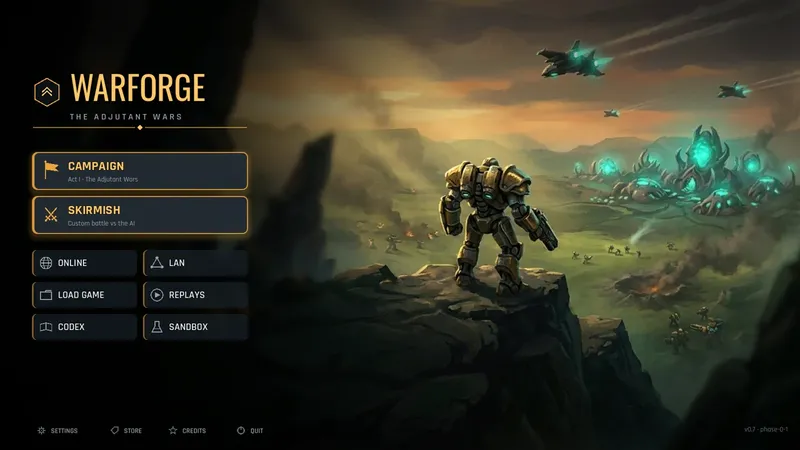
WARFORGE explores a mobile real-time strategy game with a voice adjutant. Selecting units and managing orders on a small touch screen is a central design constraint. Voice offers another way to express intent while keeping touch controls available. The project is in development; the adjutant is a product direction being evaluated, rather than a claim that arbitrary spoken commands already work reliably on every phone. The interesting question is whether the input helps players make the decisions they intended.
The model parses; the simulation executes
The design gives the model a constrained job: parse an utterance into a structured intent. Deterministic game code then validates and executes it. An ambiguous order should lead to clarification or an explicit default. This boundary protects the meaning of the player’s command. A language model is allowed to phrase feedback, but it should not silently invent a different game action. It is the same engineering idea that makes other AI workflows inspectable: keep proposals separate from accepted mutations.
The stack follows the simulation
Godot and GDScript support the game. The simulation design uses packed unit data, fixed-tick logic and MultiMesh rendering rather than a node and physics body for every unit. Native voice plugins belong to their own device work. The planned game keeps offline play and touch parity central. These constraints make performance and command correctness testable separately. They also prevent a polished voice demo from hiding an unusable game when speech is disabled.
Where it stands
The repository’s build order is risk-first: simulation, voice-loop prototype and a playable RTS slice before broader content. Physical-device verification remains part of the gates. This is a development story, not an App Store launch announcement. The useful next evidence is a player giving an order, seeing the intended units respond and understanding what happens when the order cannot be accepted. That is a much stronger demonstration than a transcript that merely sounds convincing.
Continue reading
The current portfolio, server-side AI architecture and my development workflow. Browse all projects or follow the newsletter.