Research belongs next to the case
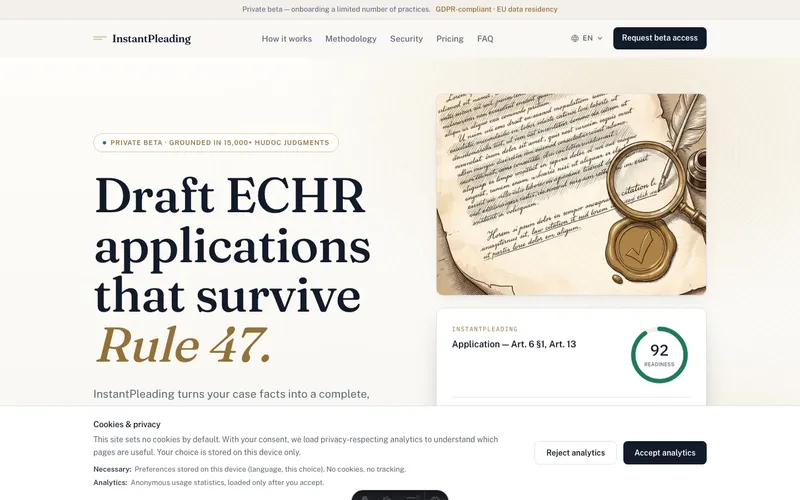
Instant Pleading supports AI-assisted preparation of ECHR cases and pleading drafts. The active product brings case and document management, legal research, draft generation, citation verification and export into one workflow. A standalone chat window misses an essential constraint: the answer must relate to the actual case and to usable source material. The product is therefore built around documents and evidence, not just prompts. A draft becomes useful when a practitioner can inspect the reasoning behind it.
A source pipeline before the drafting pipeline
The repository separates HUDOC ingestion and corpus synchronisation from the Django application. The ingestion project maintains the source corpus and embeddings in PostgreSQL. The application then uses Django, LangGraph and Celery for its research and drafting flows. This separation matters operationally: a failed ingestion run and a failed draft are different incidents. They need different checks. It also makes the provenance question explicit: which source material was available when a document was generated?
Citation verification has its own job
A plausible legal paragraph is not evidence that its citation exists or supports the statement. Citation verification belongs after generation as a distinct product step. The user needs to compare the claim with the source and decide whether it belongs in the pleading. I avoid presenting generation as a finished legal result. In this product, the useful output is an inspectable draft with a path back to the material used, followed by professional review.
Separate public and authenticated surfaces
The authenticated React app handles the working case. An Astro landing handles the public explanation and legal pages. The backend and scheduled ingestion run on Hetzner; the web app and landing have independent deployment paths. Keeping these roles separate avoids putting case workflows into a marketing website. It also helps explain the current stage honestly: a public landing and a running backend do not, by themselves, prove that every research and export path has passed end-to-end product validation.
Where it stands
The current milestone is product validation. Billing code is retained for later activation, while the focus remains registration, documents, research, drafting, verification and export. I am describing a tool for practitioners to evaluate, not a substitute for a lawyer or a promise about case outcomes. The most valuable next review follows a complete case workflow and checks the citations against their sources. That gives better evidence than a polished generated sample in isolation.
Continue reading
The current portfolio, server-side AI architecture and my development workflow. Browse all projects or follow the newsletter.